Portfolio Details - Information Cards
Brief Overview:
Imagine being told you have colorectal cancer—a life-altering moment squeezed into a 60-minute consultation. The emotional weight is immense, and patients often struggle to absorb critical information, while surgeons, pressed for time, strive to foster shared decision-making. This communication gap can ripple through the entire treatment journey. As part of a dedicated team, in collaboration with Charlie Tango and Køge Universitetshospital in Denmark, we set out to bridge this divide, designing a tool to empower patients and nurture meaningful, empathetic dialogue during the early diagnosis stage.
Our Solution
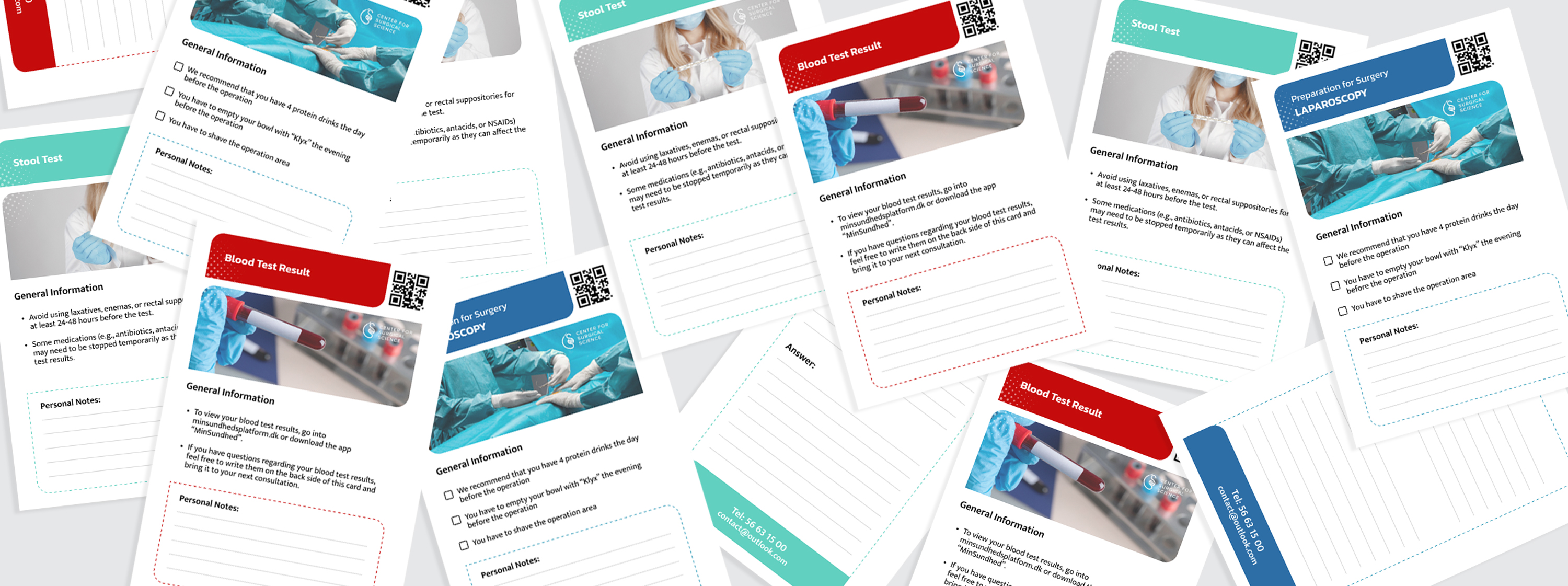
We designed physical information cards distributed throughout the patient journey, personalized to each case. These cards provide essential information, include space for notes and questions, and are integrated into a digital tracking system for healthcare providers.
How was the process:
As a team, we turned to human-centered design, guided by the Double Diamond model, helping us navigate this project's emotional complexity with structure and creativity. Our journey kicked off with the discovery phase, where our team dove deep into the emotional and cognitive landscape of a cancer diagnosis. Together, we conducted desk research, poring over academic articles, reports, and books to understand the nuances of doctor-patient communication and the psychological toll of life-changing news. We asked ourselves, “How might we foster an equal, patient-centered conversation between cancer patients and surgeons?” To ground our findings, our team interviewed a seasoned surgeon from Køge Hospital and spoke directly with patients, listening to their raw, firsthand experiences. These conversations gave us a shared understanding of the stakes: patients needed clarity and support, while surgeons craved tools to make consultations more meaningful.
In the define phase, our team worked together to sift through our research, using inductive coding to let themes emerge organically from the surgeon’s insights. We clustered our findings into recurring patterns, identifying key pain points—like patients’ struggles with information retention and the emotional barriers to shared decision-making. This collaborative effort helped us sharpen our focus and craft a guiding research question to steer our next steps as a team.
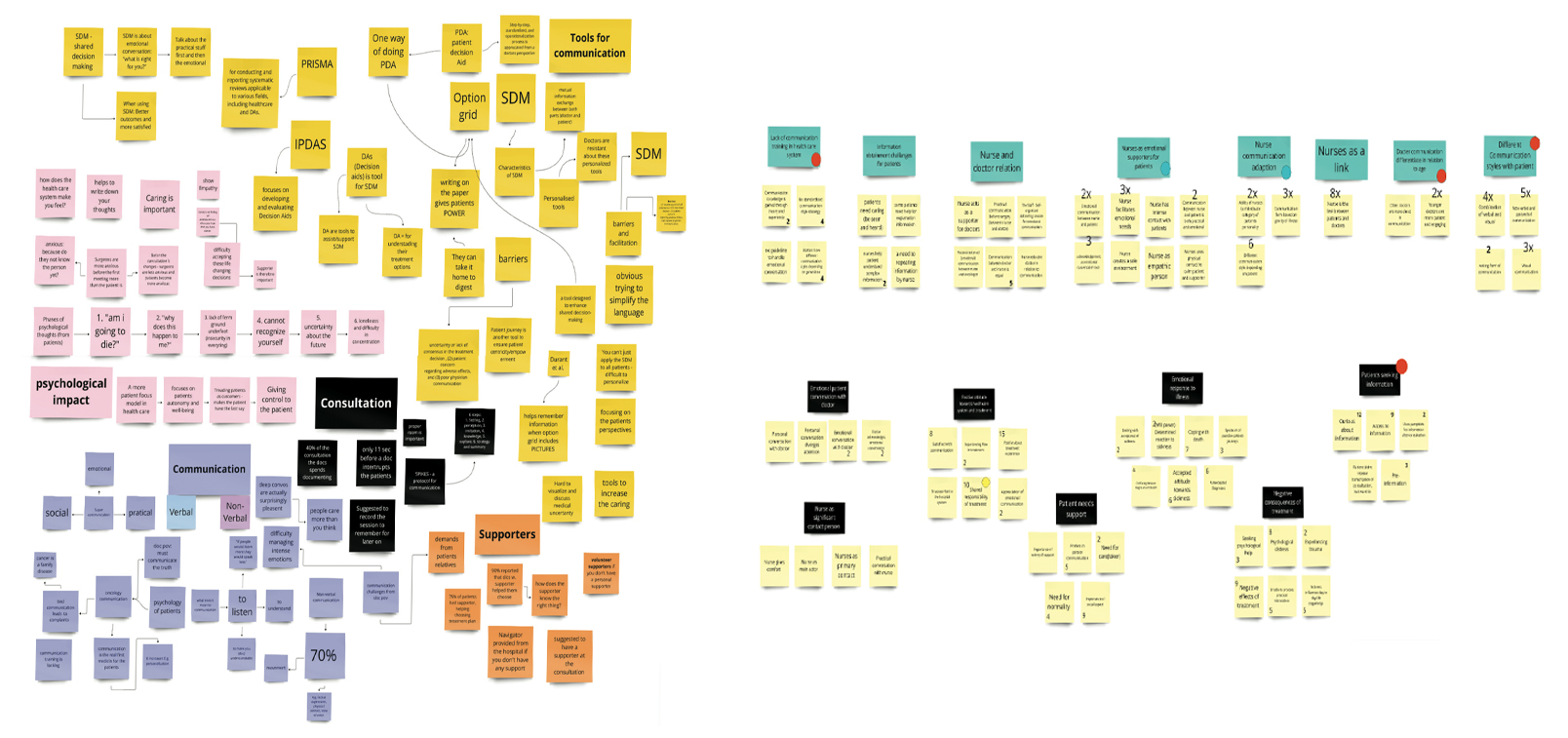
Thematic clustering of findings from literature review and Thematic coding of user research interviews
With a refined problem in hand, we transitioned into the develop phase, where our team’s creativity took center stage. We brainstormed together, using techniques like the Lotus Blossom and Metaphor workshops to spark ideas, followed by Dot Voting and a Decision Matrix to prioritize and evaluate them. Through iterative discussions as a team, we honed in on a solution that felt both practical and deeply empathetic: a set of physical information cards, personalized for each patient’s journey. These cards, paired with a digital tracking system for healthcare providers, would deliver clear, digestible information at key touchpoints, with space for patients to jot down notes and questions—empowering them to actively engage in their treatment decisions.
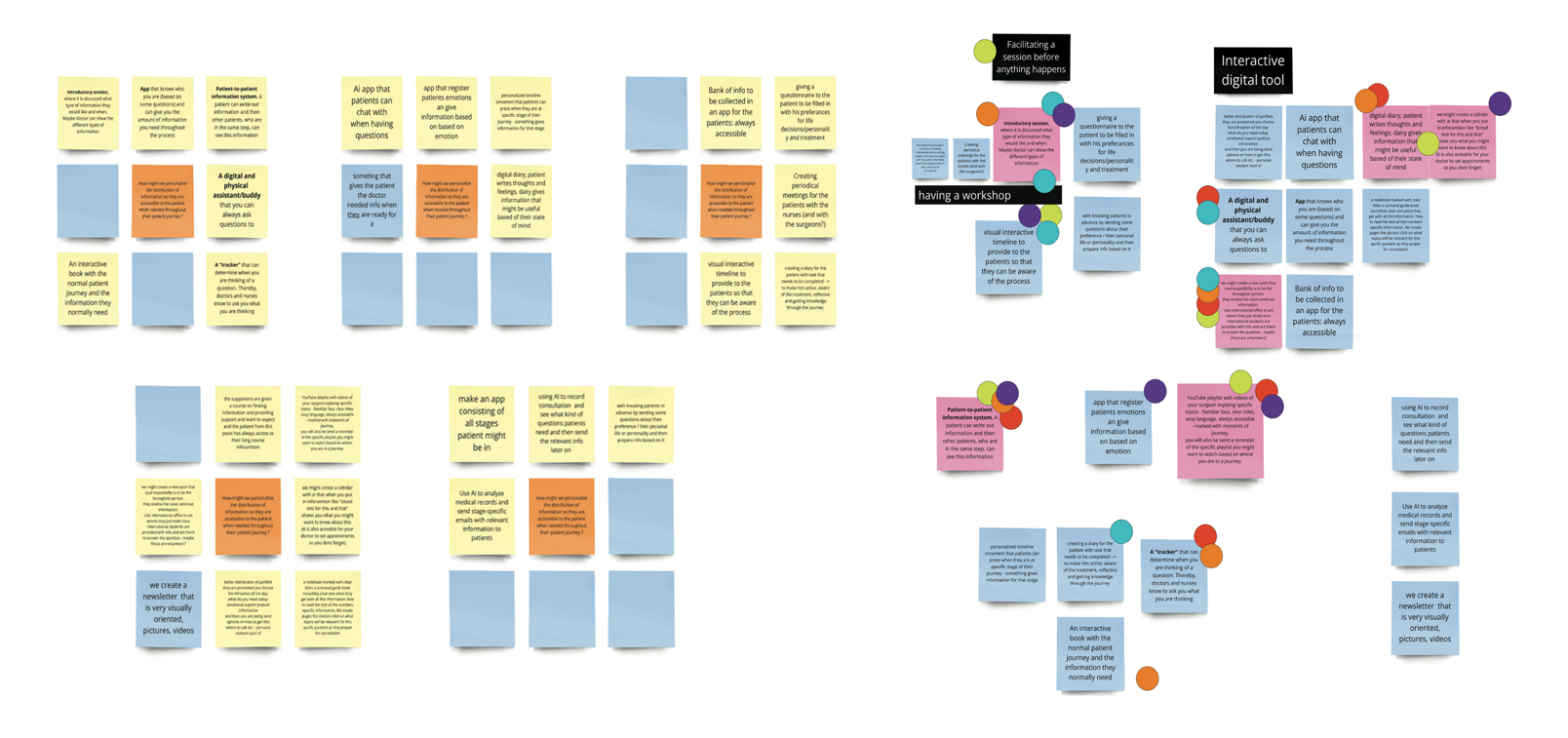
Lotus blossom from idea generation and Dot voting exercise
Finally, in the deliver phase, our team brought the concept to life with a low-fidelity prototype. We chose a hands-on, sketch-based approach to focus on functionality, allowing us to iterate quickly based on feedback. Later, we created a digital version of the cards for online validation sessions, ensuring stakeholders could visualize the idea and share their insights. To test the broader service experience—not just the cards themselves—our team crafted semi-structured questions and mapped out the patient journey, showing exactly where the cards would offer support. Feedback from patients and healthcare professionals helped our team refine the concept, ensuring it was not only relevant and valuable but also seamlessly integrated into the existing healthcare system.
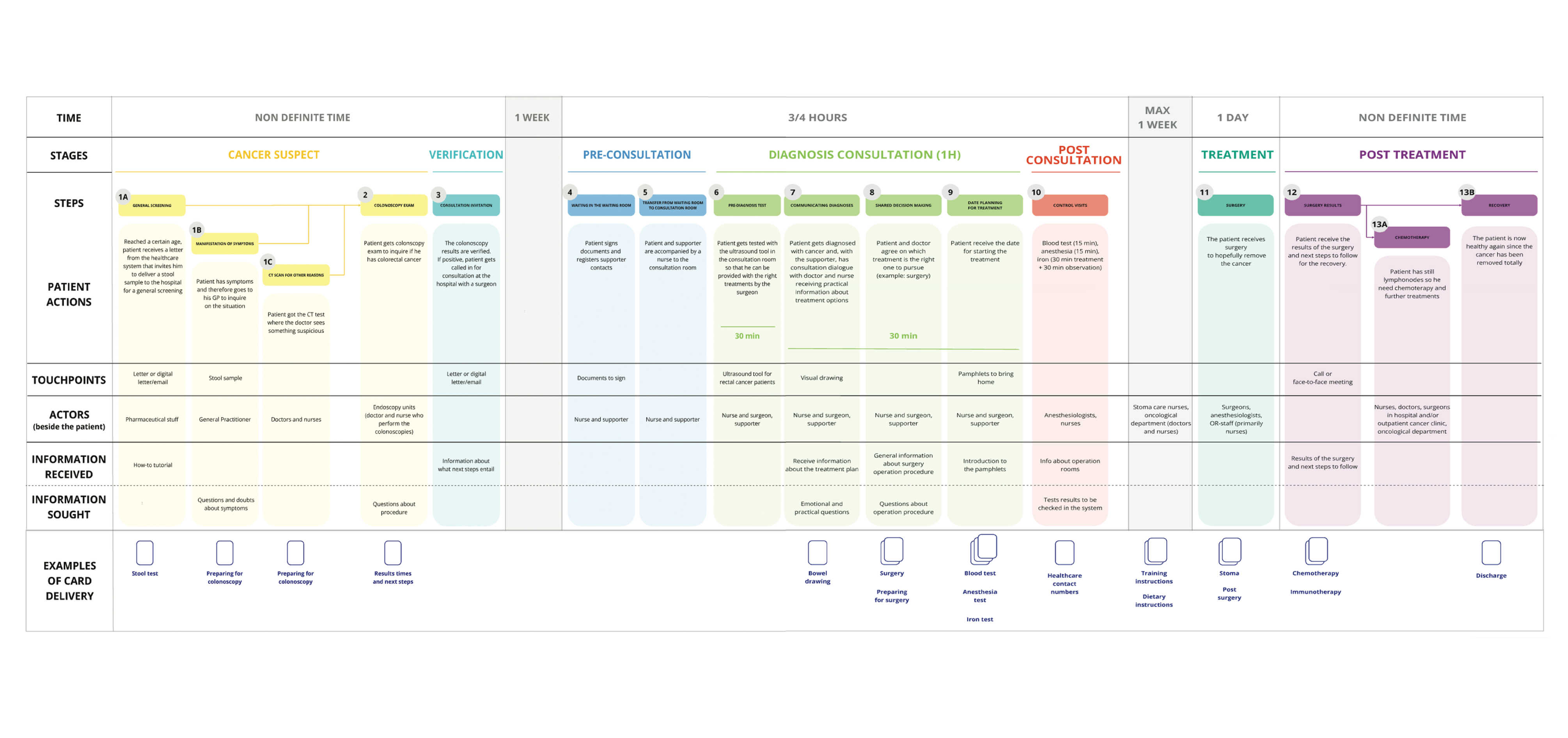
User journey to-be - Example of when specific cards categories are distributed along the user journey
The result
Our project proposed a thoughtful, patient-centered tool that could transform the colorectal cancer diagnosis experience, turning moments of overwhelm into opportunities for empowerment, clarity, and connection. By equipping patients with clear, personalized information through physical cards, our solution aimed to alleviate emotional strain with digestible medical details, while streamlining consultations for healthcare professionals.
Value Created by Our Concept
In our project, we aimed to create tangible value for both patients and the healthcare system by empowering patients with easy-to-understand, personalized, and accessible information through customizable paper cards distributed at key points in their colorectal cancer journey. These cards reduce information overload and emotional stress by breaking down complex medical details into manageable, timely touchpoints, enabling patients to process information at their own pace and actively participate in shared decision-making. The cards also support healthcare professionals by providing a simple, visual tool that enhances communication, making consultations more effective and time-efficient while offering insights into patients’ needs. Designed to integrate seamlessly into existing hospital systems like Denmark’s “kræftpakkeforløb,” the solution is feasible and adaptable. Validated through stakeholder feedback, including patients, nurses, and surgeons, the concept ensures usability, relevance, and value. Ultimately, our human-centered service improves patient experience, builds trust, supports informed decision-making, and is practical for real-world implementation.
Challenges We Faced
Throughout the project, several challenges emerged that required careful navigation to ensure progress. One significant difficulty was the initial breadth of the research focus during the desk research phase. The team had a large pool of broad questions, making it challenging to pinpoint a clear direction for the expert interview. To overcome this, a brainstorming session was organized to refine questions, prioritizing those most aligned with the project's goals. Visualization techniques were used to identify patterns and converge on a focused theme, ensuring efficient use of limited interview time.
Another challenge was the emotional sensitivity of the subject matter, particularly when conducting semi-structured interviews with patients and nurses. Discussing cancer diagnoses required creating a safe and comfortable environment to respect participants' emotional boundaries. The team addressed this by conducting one-on-one interviews in participants' native languages, paying close attention to emotional cues, and ensuring GDPR compliance through secure platforms like Microsoft Teams. This approach fostered trust and yielded richer, more nuanced data.
Project Learnings:
The project offered valuable opportunities for personal and professional growth. I gained proficiency in qualitative research methods, such as semi-structured interviews, inductive coding, and thematic clustering using tools like Miro. These techniques strengthened my ability to synthesize unstructured data into actionable insights, a transferable skill for any analytical or design-oriented role.
The iterative nature of the Double Diamond framework deepened my understanding of design thinking, teaching me how to balance divergent and convergent thinking to refine ideas systematically. Navigating group dynamics and aligning diverse perspectives improved my collaboration and facilitation skills, as we worked to leverage the team’s strengths and maintain transparent communication.
Project information
- Category Service Design
- Client Køge Hospital
- Project date September 2024